


How Sungrow Floating PV Systems Meet Reliability Requirements in Harsh Wind and Wave Environments
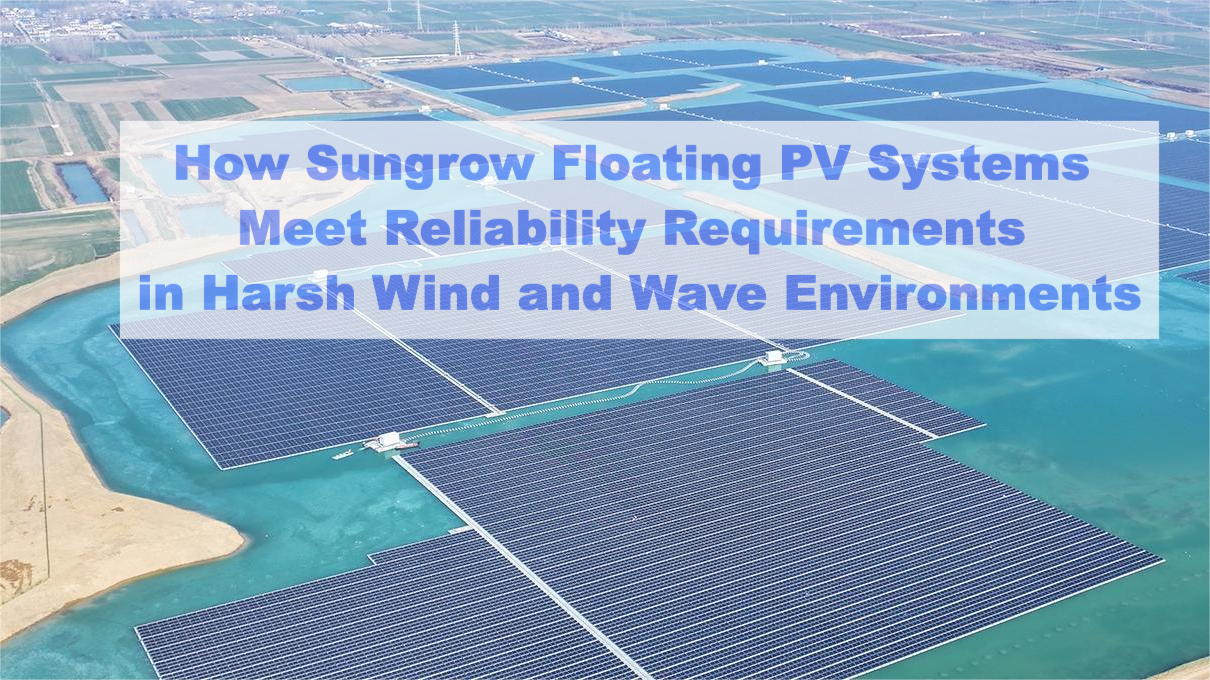
With the accelerating global energy transition, the floating PV system, a novel method of power generation that efficiently utilizes water resources, is experiencing explosive growth. Globally, over 1,600 floating PV plants have been built across more than 60 countries. As these projects gradually extend from calm waters to complex water environments like hydropower station reservoir and dam, they face unprecedented tests of long-term reliability and survivability.
For investors, the core challenge now lies in accurately identifying and selecting highly reliable floating PV systems for project success and investment returns.
Challenges of Harsh Water Environments to Floating PV Systems
1. Wind Loads
Strong winds not only generate uplift and downward pressure on PV modules but also exert tremendous horizontal thrust on the entire floating PV array. This thrust can cause overall displacement of the array, structural deformation, and even fatigue fractures in connectors.
During typhoons, instantaneous wind speeds can exceed 50 m/s, equivalent to over 1.7 kN/m² of wind pressure on the panel, placing extremely high demands on the system's structural rigidity, connection strength, and aerodynamic design.
2.Wave Loads
Unlike the small water bodies such as ponds, waves generated by open water bodies, such as dams and hydropower reservoirs carry immense energy, inducing heave, roll, and pitch motions in floating structures. These frequent wave impacts subject the floating solar PV array to both instantaneous shock and persistent oscillation, ultimately
leading to loosened connections.
3.Fatigue and Overturn Risk
When strong winds and heavy waves intersect, the system undergoes violent pitching and swaying. Insufficient structural strength and an improperly designed anchoring system can cause partial damage to the array. If the anchoring system fails, the entire array may collapse.
4.Anchor Failure Risk
The mooring system is the lifeline of the floating PV solar project. In deep water and high waves, the massive tension generated by the array is concentrated on the mooring lines and anchors.
Insufficient design margins or failure to account for dynamic response can lead to cable breakage or anchor dragging, causing the entire station to drift and potentially collide with embankments.
5.Large or Frequently Changing Water Level Differences
In pumped-storage power
stations or monsoon-affected areas, water levels can fluctuate by tens of
meters. This requires the floating PV system to be highly
adaptable—safeguarding the system against grounding damage at low levels, and
securing mooring lines against snapping under high tension during peak water
levels.
How Sungrow Floating PV Addresses These Challenges
Facing the severe challenges outlined above, Sungrow floating PV leverages deep
project experience and continuous technological innovation to deliver high-reliability floating PV solutions.
1. Precise Environmental Assessment
During the preliminary phase, our technical team conducts an exhaustive analysis of historical wind, wave, current, and water level data, alongside extreme condition simulations. This approach averts unnecessary costs from over-engineering while eliminating safety hazards caused by under-engineering.
2. Custom High-Performance Floats
The float is the physical foundation of the system. Our Sungrow floating PV system employs customized High-Density Polyethylene (HDPE) floats with three core characteristics:
l High Strength: Through optimized structural rib design and material formulation, the floats exhibit excellent compression and impact resistance, effectively dispersing local stress.
l Flexibility: Appropriate flexibility allows the floats to undergo slight deformation under wave loads, absorbing energy and avoiding brittle fractures.
l Fatigue-Resistant Design: Critical connection points are reinforced against cyclic wave loads, significantly enhancing their ability to withstand alternating stress, delivering a service life of over 25 years.
3. Exceptional Structural Stability
The entire Sungrow floating PV system is rigorously calculated and verified to withstand extreme wind speeds of up to 260 km/h (approx. 72 m/s) and significant wave heights exceeding 1 meter. These specifications allow the plant to survive strong typhoons.
4. Elastic Mooring System
The mooring design incorporates appropriately elastic lines with an optimized layout angle and pre-tension. When subjected to wind and wave forces, the system buffers immense pulling loads through controlled elastic deformation, which reduces stress concentration on both the floating array and the anchoring foundations.
In addition, we offer a variety of anchoring solutions, including gravity anchors, pile anchors, and drag anchors, tailored to different underwater conditions (silt, clay, sand, rock), to provide reliable holding in any water environment.
5. Fully Protected Electrical System and Ecological Safety
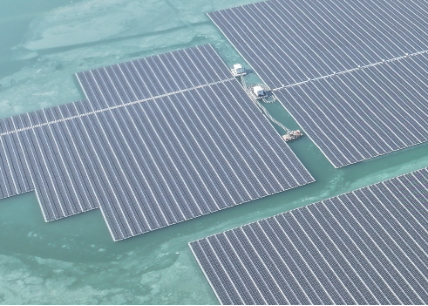
Sungrow Floating PV supplies floating barge, which is designed to support electrical equipment such as transformers and inverters. Key components utilize protection ratings exceeding industry standards with redundant safeguards, maintaining efficient operation amid high humidity, salt spray, and vibration.
Furthermore, all HDPE floats comply with the rigorous BS 6920 standard for drinking water safety. This prevents chemical leaching even in potable water reservoirs, achieving harmony between green energy and the aquatic ecosystem.
Global Practice Validation
True reliability must be validated by both extensive practice and extreme environments.
To date, Sungrow floating PV systems have been installed globally, accumulating over 4.3 Gigawatts (GW), firmly holding a leading position in the industry. This vast base of projects constitutes the most powerful endorsement of its technological reliability.
Particularly noteworthy is that in typhoon-prone regions of East and Southeast Asia, we have successfully delivered and stably operated over 30 projects.
Conclusion
The future of floating PV lies not in low-price competition, but in the ability to conquer extreme environments. As technology moves into deeper waters, only those providers with rigorous technical assessments, high-performance materials, and extensive field
experience can safeguard an investor's returns amidst the storm.
Are you currently planning a PV project in a complex water environment? Contact our experts for a complimentary preliminary assessment.