


London, October 21, 2026 — As Europe experiences growing energy transition demands with deeper electrification and smarter grid integration emerging as core priorities, Sungrow, a global leading provider of PV inverters and energy storage systems (ESS), participated in the BloombergNEF (BNEF) London Summit to discuss clean-tech manufacturing, localization, and energy storage’s role in a secure, affordable, and resilient energy transition.
Strengthening Europe’s Energy Future Through Localization and Reliability
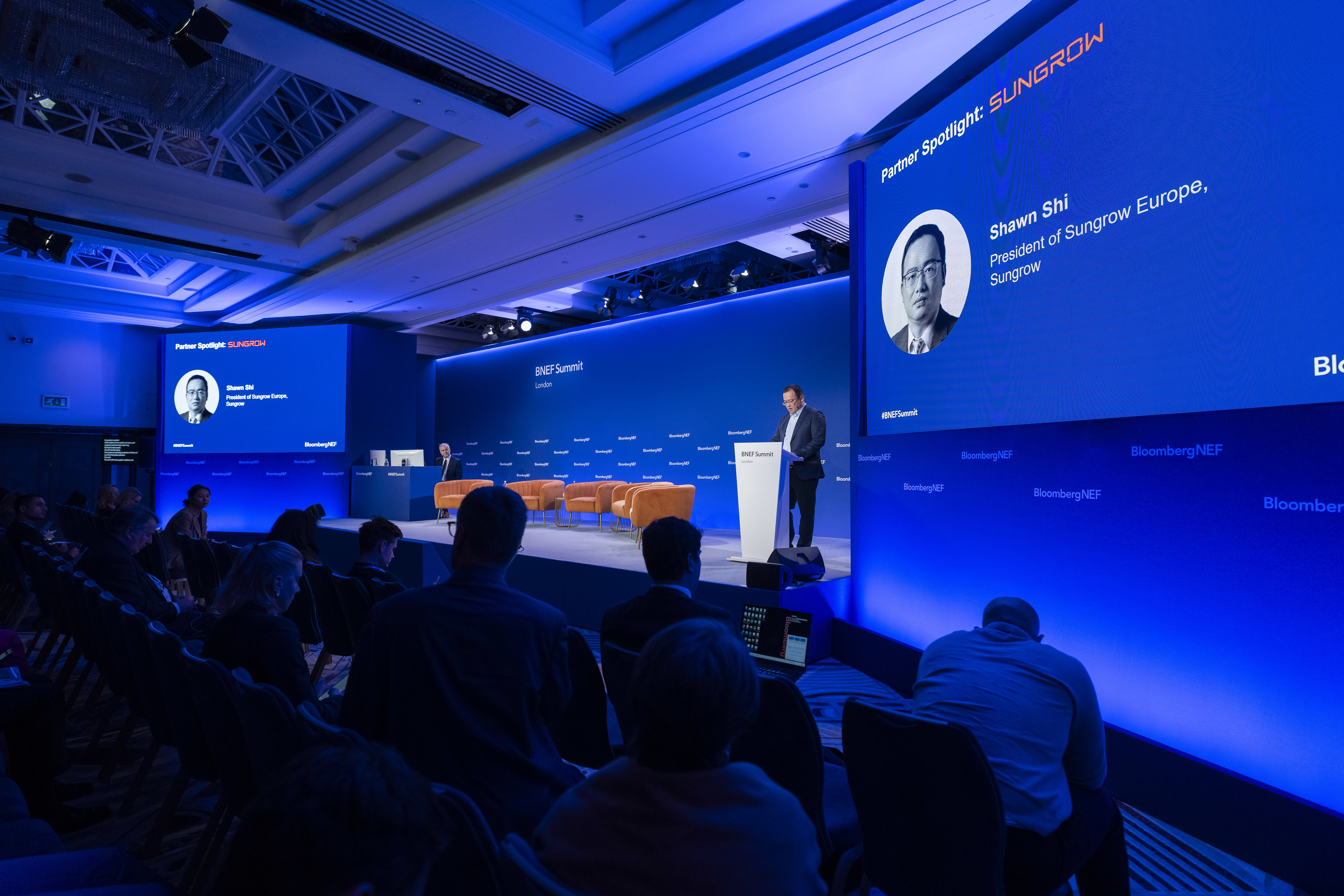
During the spotlight speech, Shawn Shi, President of Sungrow Europe, outlined the company’s commitment to supporting Europe’s evolving energy landscape. He emphasized that the energy transition must go beyond expanding renewable capacity to building a secure, resilient and reliable power system.
Shawn highlighted localization, trust and grid reliability as key priorities. Since entering Europe in 2011, Sungrow has built a local presence with more than 900 employees, almost all locally hired. Its planned €230 million manufacturing facility in Poland, expected to begin production in 2027, will bring manufacturing closer to customers and strengthen supply-chain resilience.
Shawn also underscored the importance of cybersecurity, managing customer relationships across energy assets and data, and collaborating with European suppliers, installers, and developers. As renewable penetration increases, energy storage is becoming increasingly important to grid stability and system resilience.
“Europe’s transition will not be secured by capacity alone. It needs capacity that is local enough to support, trusted enough to connect, and strong enough to keep the grid reliable.” Shawn emphasized.
Navigating Competitiveness in Europe’s Clean-Tech Industry
Javier, Vice President of Sungrow Europe, joined the panel “‘Made in Europe’ Put to the Test: What Should Europe Fight to Keep?”, alongside industry, finance and policy leaders to discuss how Europe can strengthen its clean-tech manufacturing base, preserve industrial expertise and supply chains, and balance localization policies with global supply-chain cooperation to remain competitive in the energy transition.
The discussion examined how local-content requirements and industrial policies can encourage investment while balancing manufacturing realities, project costs and deployment timelines. Participants also explored the conditions needed to build a competitive European clean-tech industry, including predictable regulation, skilled workers, efficient permitting, innovation and strong local supply chains.

Technology, Innovation and Investment
At the theme lunch hosted by Sungrow, “The Outlook for BESS in Europe: How Technology Shapes Investment and Project Development,” James Li, Vice President of Sungrow Europe, joined industry leaders including Erik Stromso, CEO and Co-Founder of BW ESS; Sonia Dunlop, CEO of the Global Solar Council; and Jordi Francesch, Global Head of Clean Energy at Nuveen Infrastructure, to explore the key trends, challenges and innovations shaping Europe’s battery energy storage system (BESS) market.
The discussions covered European storage market trends, policy developments and regulatory certainty, energy storage’s role in enhancing grid flexibility and system resilience, and strategies to secure projects and attract institutional capital.
The exchange highlighted the importance of looking beyond upfront costs when evaluating energy storage investments, with lifetime performance, operational reliability and service support playing key roles in project economics and investor confidence. It also explored how advanced technologies, including grid-forming capabilities and black-start functionality, can enhance power system resilience and operational flexibility.
Through its participation in the summit and theme lunch, Sungrow reaffirmed its commitment to working with European stakeholders to advance clean-energy deployment, strengthen local capabilities and support a reliable electricity system.


